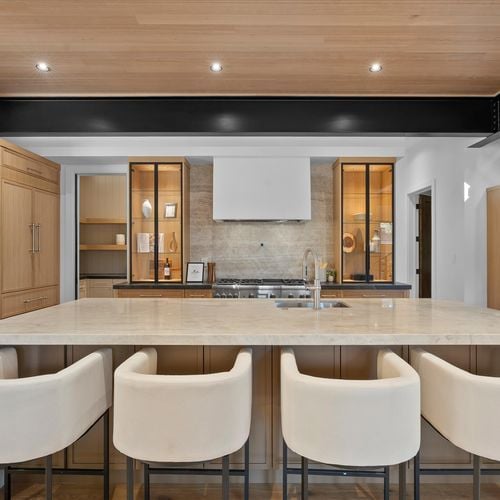
There are three ways to buy new construction in Truckee: buy a finished spec home, buy a spec home while it's still being built, or build a custom home on your own lot. A finished spec home is the fastest and gives you the most price certainty, but you take the house as designed. A mid-construction purchase trades some speed for a say in finishes, and adds builder risk. A custom build gives you full control and the longest timeline, typically two years or more from lot to keys in a mountain market. The right choice comes down to three things: when you want to be skiing out of the house, how many decisions you want to own, and how much schedule and cost risk you're willing to carry.
I came to real estate from construction and land development, so I've seen each of these paths from the builder's side of the table. Here's how I walk Bay Area clients through the choice.
The three paths at a glance
| Finished spec | Buy mid-construction | Custom build | |
|---|---|---|---|
| Time to move in | Close of escrow | Remaining build time | Design + approvals + build |
| Design control | None | Some finishes only | Complete |
| Price certainty | High | Medium (change orders) | Lowest |
| Biggest risk | Hidden defects | Builder finances and delays | Budget and schedule |
| Best for | Buyers who want it this season | Buyers with some patience and opinions | Buyers with a vision and a runway |
Path 1: The finished spec home
A completed spec home is the closest thing to buying a car off the lot. The builder took the design risk, the permitting risk, and the cost overruns. You see exactly what you're getting, and you can be in it for the next ski season.
The trade-off is that you're inheriting someone else's decisions, including the ones you can't see. Here's what I look at on a finished spec home:
Final sign-off. Confirm the final inspection is complete and there are no open permits or outstanding corrections with the building department.
As-built vs. as-drawn. Compare the house to the approved plans. Field changes happen; you want to know which ones and whether they were approved.
A winter on the record. If the home has been through a winter, ask how the roof shed snow, where ice built up, and whether the heated surfaces and drainage performed. If it hasn't, plan for it.
Warranty terms in writing. California has statutory protections for new-home construction defects, and many builders add their own warranty. Get both reviewed by a real estate attorney before you remove contingencies.
Carrying cost leverage. A builder holding a finished home through the winter is paying interest, insurance, and snow removal. That can create room in price or terms.
Path 2: Buying while it's being built
Buying mid-construction can be the sweet spot: you choose some of the finishes and still move in years sooner than a custom build. It's also where I see buyers take the most risk without realizing it, because the house isn't finished and neither is the builder's financing.
Where your deposit sits. Deposits should go into escrow or a structure that protects them, not straight into the builder's operating account.
The builder's runway. Ask who is lending on the project and whether the loan covers completion. A builder short on cash will slow down, and subcontractors will notice before you do.
Completion date with consequences. A target date without remedies isn't a commitment. Negotiate what happens if it slips.
Change-order pricing up front. Agree on how upgrades and changes are priced before you sign, not after.
Site access for your inspector. Get the right to inspect at framing and before drywall. Those are the last moments you can see the structure, insulation, and mechanical runs.
Lien releases. Confirm subcontractors and suppliers have been paid for completed work so their claims don't follow the house to you.
I've been on the other side of the table when a spec builder ran short of cash mid-project. These protections are cheap to ask for and expensive to need.
Path 3: The custom build
Building custom is the only way to get exactly the house you want on exactly the lot you want. It's also a multi-year project with a long list of decisions, and in Truckee the calendar is set by snow.
A realistic custom timeline has four phases:
Lot due diligence. Utilities and sewer or septic, slope and soils, snow storage, driveway grade, and any HOA or club design guidelines. A lot that looks inexpensive can carry a six-figure driveway or a difficult foundation.
Design. Working with an architect and engineers on a plan that fits the site, the snow loads, and the budget. On my projects, design typically takes six to nine months.
Approvals. Design review (which can be extensive in private communities like Martis Camp, Lahontan, or Schaffer's Mill) and the building permit from the Town of Truckee, Nevada County, or Placer County, depending on the lot. Approvals typically run three to four months.
Construction. In the mountains, winter limits excavation and foundation work, so the start date matters. A project that misses the building season can lose months: if approvals land in late fall, the start may wait until spring. Construction itself is typically about 12 months.
Budget the soft costs as seriously as the hard costs. Architecture, engineering, surveys, permit and impact fees, utility connections, design review deposits, and construction financing add up quickly and rarely show up in the per-square-foot number people quote at dinner parties. On my recent luxury custom projects, all-in costs have ranged from about $750 to $1,500 per square foot, including soft costs and land. Where a project lands in that range depends on the lot, the site work, the design, and the finish level.
How you contract with the builder matters as much as who you hire. A fixed-price contract shifts cost risk to the builder, who will price that risk in. A cost-plus contract can be more transparent but leaves the overrun risk with you. Either can work with the right builder and the right reporting.
If you're managing it from the Bay Area
Most of my Silicon Valley clients keep their primary home in the Bay Area, which means someone else is their eyes on site. Whichever path you choose, set up the reporting before you commit:
Regular photo updates through the builder's project portal
Third-party inspections at key milestones, scheduled before they're needed
Draw requests reviewed against completed work, not against the schedule
A local contact who will tell you when something looks wrong
How to decide: three questions
When do you want to use the house? If the answer is this season or next, a finished or nearly finished spec home is the only realistic path.
How many decisions do you want to own? Custom means hundreds of them. Some buyers love that; others would rather choose from three finished homes.
How much risk can you carry? Not just money, but time and attention. A custom build that runs a year late costs more than the overrun.
There's no wrong answer, only a wrong match. The worst outcomes I see come from buyers who chose custom for the control and then discovered they didn't have the time to exercise it, or bought a spec home quickly and skipped the questions above.
How I help
My background is construction and land development, which shapes how I evaluate new construction for buyers. I'll walk a spec home with you and point out what the listing photos won't show, help you structure the business terms on a mid-construction purchase, and connect you with the architects, engineers, attorneys, and inspectors I trust for a custom build. If you're weighing new construction in Truckee or Lake Tahoe, I'm glad to talk it through before you commit to a path.
Frequently asked questions
How long does it take to build a custom home in Truckee?
Plan on roughly two years or more from buying the lot to moving in: typically six to nine months of design, three to four months of approvals, and about 12 months of construction. Winter limits excavation and foundation work, so a start that misses the building season can add several months.
Is it cheaper to buy a spec home or build custom in Truckee?
It depends on the lot, the design, and the market. A finished spec home gives you a known price; a custom build gives you control but adds soft costs, financing costs, and the risk of overruns. Comparing the two means pricing the full custom budget, not just a per-square-foot construction number.
What should I ask a builder before buying a home under construction?
Ask where your deposit will be held, who is financing the project and whether the loan covers completion, what happens if the completion date slips, how change orders are priced, and whether your inspector can review the work at framing and before drywall.
Can I manage a Truckee build from the Bay Area?
Yes, many owners do. It works best with regular photo reporting, third-party milestone inspections, draw requests reviewed against completed work, and a local representative who visits the site.
Do private communities like Martis Camp or Lahontan have their own design rules?
Yes. Many private communities in the Truckee area have architectural guidelines and a design review process that runs in addition to the county or town building permit. Review them before you buy a lot.
This article is general information, not legal, tax, or construction advice. Consult a real estate attorney and qualified professionals for your specific situation.
Thinking about new construction in Truckee or Lake Tahoe? Start a conversation with Dave.
Dave Gove | CA DRE #02046737 | NV S.201156 | Real Broker
Check out this article next